
Epoxy Basement Floor Cost: What You're Really Paying For
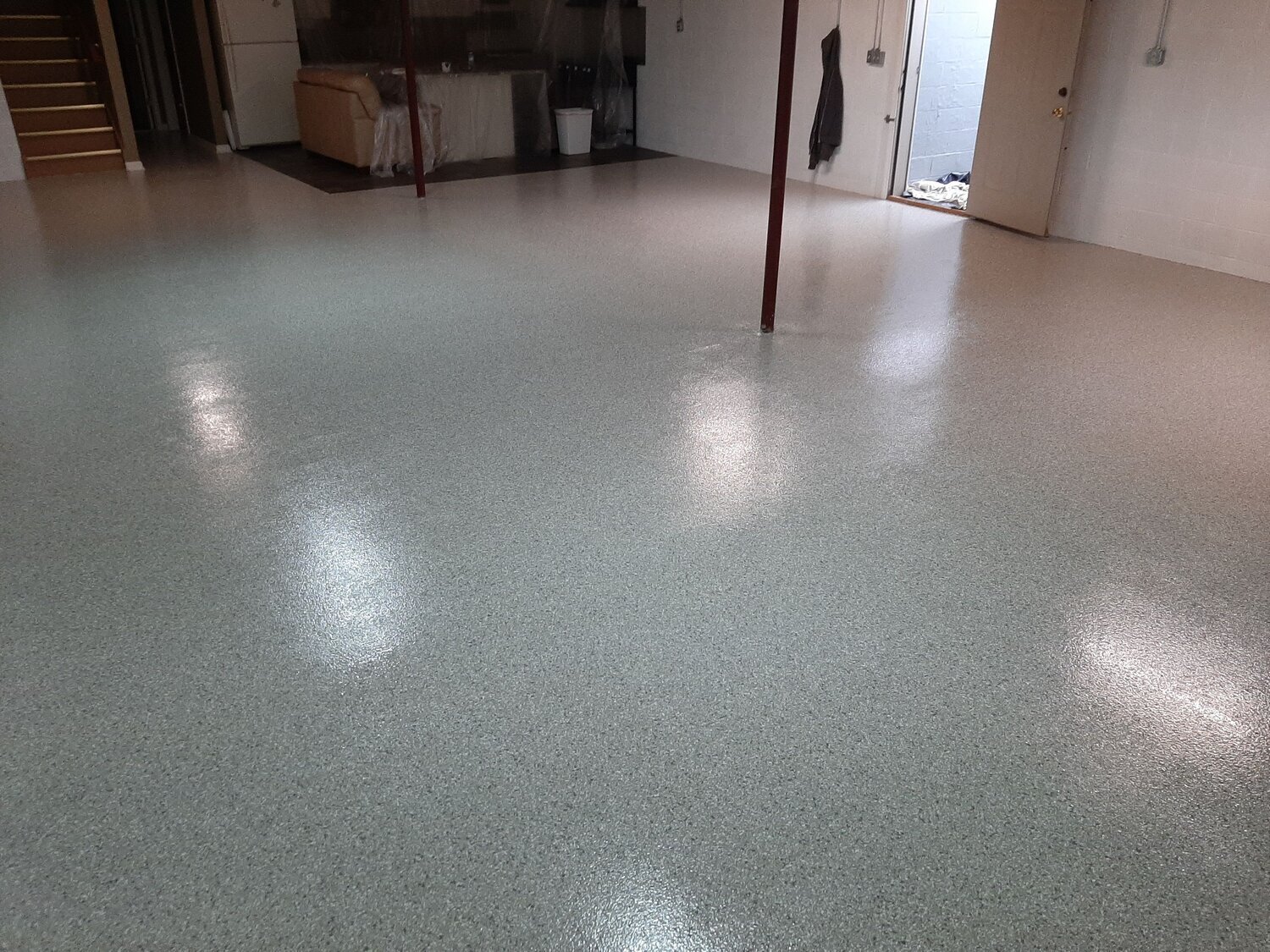
If you've started pricing out a basement floor coating, you've probably already discovered that the numbers vary — sometimes wildly. One quote comes in at $800. Another comes in at $3,500. The materials look similar. The photos look similar. So what's actually going on?
Understanding epoxy basement floor cost means understanding what drives those numbers — and more importantly, what you're actually getting (or not getting) at different price points. Because in this category, cheap almost always comes with a catch.
Why the Price Range Is So Wide
Basement floor coating prices vary based on a handful of variables, and it helps to know what each one actually affects.
The size of the space. More square footage means more materials and more labor. A small utility basement and a finished rec room-sized space aren't the same job.
The condition of the concrete. Floors with significant damage, old coatings that need to be removed, or high moisture levels require more prep work. Any existing coating or paint has to be ground off completely — proper adhesion won't happen over an existing product. That's not optional, and any quote that doesn't account for it should raise a question.
The coating system being used. This is where the biggest price variation comes from — and where the most important decisions get made. A single-coat DIY epoxy kit is not the same thing as a professionally installed multi-layer system, even if both are described as "epoxy." The products, the prep, and the longevity are in completely different categories.
The contractor's experience and certification. A manufacturer-certified installer who uses professional grinding equipment and quality materials is going to cost more than someone who picked up floor coating as a side service. That difference shows up in the finished product — and in how the floor performs three years later.
What Epoxy Actually Costs
DIY epoxy kits from hardware stores are the lowest upfront option. That price is real. So is the risk that comes with it.
The surface prep step — mechanical diamond grinding — is the most important factor in how long any coating lasts. Most DIY kits skip it entirely or suggest acid etching as a substitute. Without proper prep, coatings lose adhesion faster. And once a coating starts failing in a basement, the entire floor has to be ground back to bare concrete before anything new can go down. At that point, you've paid for the original installation and you're paying again.
Professional epoxy installation varies significantly depending on the size of the space, the condition of the concrete, and who's doing the work. Every floor is different, pricing will usually come from an on-site assessment.
The challenge with epoxy in a basement specifically is that below-grade concrete is harder on coatings than almost any other surface. Moisture vapor moves through basement slabs even in homes without active leaks. Epoxy is sensitive to that moisture — if it's present when the coating goes down, adhesion fails. The EPA recommends moisture testing on any below-grade concrete before coating it, and it's one of the first things we do on every basement estimate.
The Real Epoxy Basement Floor Cost Over Time
Here's the part that doesn't show up in a quote: how long does it actually last?
Epoxy in a basement environment — with moisture fluctuation, temperature variation, and limited airflow — tends to have a shorter service life than epoxy in other applications. When it fails, it fails visibly: bubbling, delamination, or peeling that spreads across the floor.
At that point, the epoxy basement floor cost conversation starts all over again — plus the cost of removing what's already there.
This is why more homeowners are looking past epoxy when they price out a basement floor. Not because epoxy is always wrong, but because the total cost of ownership over time often doesn't favor it in below-grade environments.
What a Better System Looks Like — And What It Costs
Alexander Concrete Coatings installs Penntek's complete polyurea and polyaspartic coating system. It's more durable than epoxy, cures faster, and handles the moisture and temperature conditions of a basement environment significantly better.
Here's the system:
Surface Preparation. Every job starts with mechanical diamond grinding down to bare concrete. This is the step that makes everything else work — and we never skip it.
Polyurea Basecoat. Flexible where epoxy is rigid. Bonds aggressively to prepared concrete and moves with the slab rather than resisting it. In a basement, that flexibility matters.
Decorative Flake Layer. Color flakes broadcast into the wet basecoat create the finished look. Homeowners choose from a wide range of combinations. The flake layer also adds natural texture to the surface.
Polyaspartic Clear Topcoat. UV-stable, durable, and easy to maintain. Seals the system and creates the easy-to-clean surface that makes a finished basement floor genuinely satisfying to have. A grip additive is included on most installations for consistent traction underfoot.
The complete system is four times stronger than traditional epoxy. According to the U.S. Department of Energy, flexible coating systems outperform rigid ones in environments subject to thermal cycling — which is exactly what a basement floor experiences through Ohio and Western Pennsylvania's seasons.
Most installations are completed in one day. The floor is walkable within 12 hours, ready for light items after 24 hours, and at full use after 36 hours. Every residential installation is backed by a limited lifetime warranty.
Getting an Accurate Number for Your Basement
The most honest answer to the epoxy basement floor cost question is: it depends on your specific floor, and the only way to know is to have someone look at it.
Alexander Concrete Coatings offers free on-site estimates throughout the Youngstown, Ohio area and Western Pennsylvania. We assess the concrete, check for moisture, measure the space, and give you a clear, written number — no ballpark figures, no surprises.
We're also the only authorized and certified Penntek installer in the Youngstown area and Western Pennsylvania. That certification means we're trained on exactly what we install, and we stand behind it with a limited lifetime warranty.
Contact us to schedule your free estimate.
Frequently Asked Questions
Is epoxy the cheapest basement floor option?
DIY epoxy kits have the lowest upfront cost, but the total cost over time often tells a different story. Basement environments are harder on coatings than most applications, and a failing floor that has to be redone is never the cheaper outcome. A professional installation done right the first time typically has a better long-term cost profile.
How long does a professionally coated basement floor last?
A Penntek polyurea and polyaspartic system is built for decades of use and backed by a limited lifetime warranty on residential installations. The key factors are proper surface prep and a complete layered system — both of which are standard on every job we do.
Do I need to worry about moisture before coating my basement floor?
Yes — and any contractor who doesn't address this upfront should give you pause. Moisture behind a coating causes adhesion failure. We test every basement floor for moisture as part of the free estimate process.
How soon can I use my basement after the coating is installed?
With the Penntek system, the floor is walkable within 12 hours, ready for light items after 24 hours, and at full use after 36 hours.